
About Us
Leading manufacturer of custom membrane switches, keypads, and HMI solutions.
Please fill out the form below and we will get back to you as soon as possible.
Leading manufacturer of custom membrane switches, keypads, and HMI solutions.
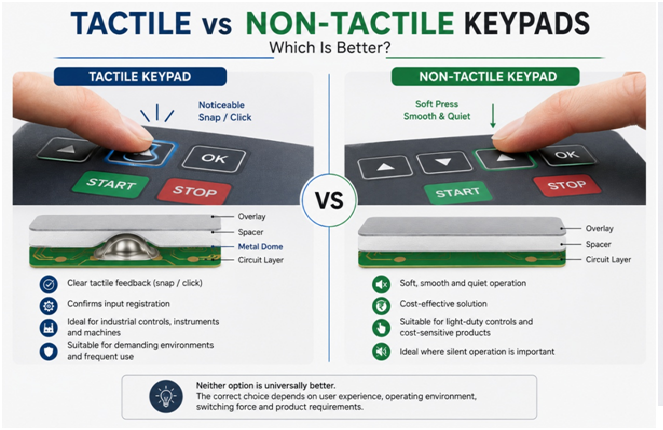
Tactile membrane keypads provide a noticeable snap or click when a key is pressed. This feedback confirms that the input has been registered.
Non-tactile keypads operate with a softer press and provide a smooth, quiet user experience.
Provide a noticeable snap or click when a key is pressed, confirming that the input has been registered.
Operate with a softer press and provide a smooth, quiet user experience.
Tactile keypads are suitable for industrial controls, instruments and machines where operators need clear confirmation.
Non-tactile keypads can be preferred for cost-sensitive products, light-duty controls or applications where silent operation is important.
Neither option is universally better. The correct choice depends on user experience, operating environment, switching force and product requirements.
The best keypad is the one that matches the needs of your users and your application.